At a recent club meeting, I saw a neat build from a fellow ham (Keith W6KME) that I wanted to re-create. What he had done was combine a cheap buck converter with a battery adapter to allow him to use a power tool battery with most amateur radio gear. I found similar components and added my own touches to make this “my own,” as well as a slight variation to support ham gear that prefers 12v (as opposed to 13.8v).
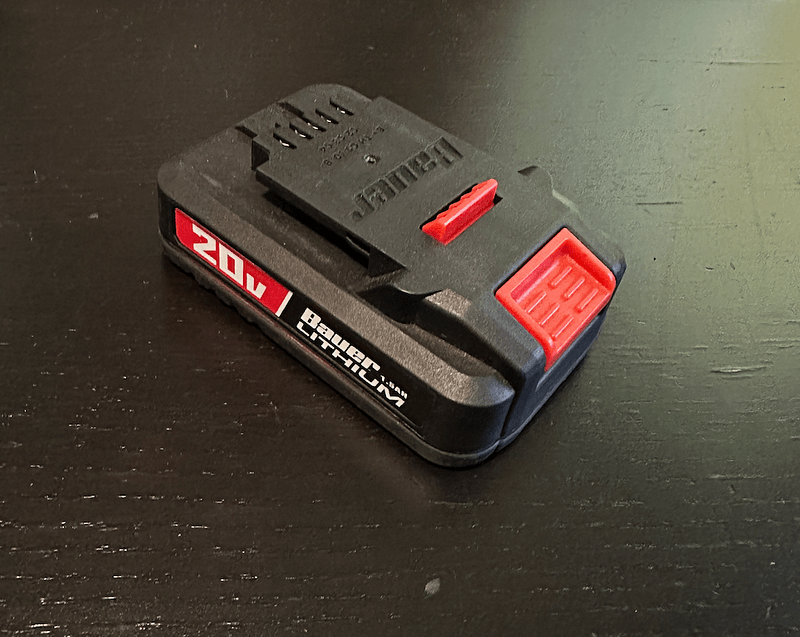
Many DIY’ers (and even non-DIY’ers) have power tool batteries lying around. The more serious folks likely have several such batteries from a single battery system; it’s how the power tool makers ensure that you stay within their ecosystem. It is convenient buying into a single battery system — I’ve bought into the Bauer system from Harbor Freight Tools. This same concept and build will work for many other battery systems (the component list has a link to purchase an adapter for Bauer, Hercules [also from Harbor Freight Tools], and Dewalt, but similar adapters exist for other batteries as well). You can use those batteries to power your ham gear. I present to you…. The Bauer-Pack!
I’ll describe the components and my build here — this is simple and should be doable by a novice.
Needed equipment:
- Anderson Powerpole crimper (I like the TRIcrimp by Powerwerx)
- Wire stripper (I like the Automatic Wire Stripper by Powerwerx)
Needed components:
- 15a Powerpole connector contacts and plastic casing (six contacts, and three each of black and red housing)
- Battery output adapter (see this link — for my build, I purchased the Bauer version because that’s the battery system that I’ve bought into)
- Buck converter — 13.8v or 12v (or do what I did, and buy both — note, if you want to build this for both, you’ll need two additional sets of 15a Powerpole connector contacts and housings)
- Optional — Some adhesive Velcro strips, to be able to attach things together once this is built
The battery output adapter can be 3d printed and built, howeverto make things easier on myself I purchased the inexpensive one linked above from eBay. A quick Google search can find similar items to purchase or print and build yourself.
First things first — attach a set of Powerpoles to the battery output adapter. Powerwerx has put together a great guide for attaching Powerpoles to a cable; rather than recreating those instructions, I’ll just link them here.
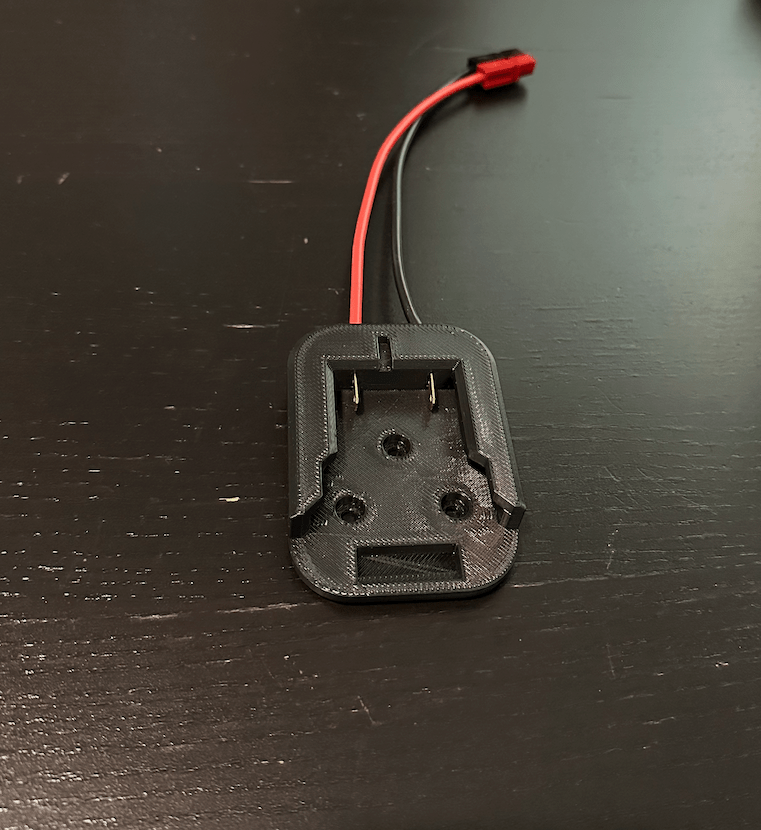
Do the same to the buck converter (or to both of them, if you bought both). The buck converters appear physically identical, however there is a silver label on the bottom that describes the details of the converter (so you can distinguish between the 12v and 13.8v before adding your own labeling).
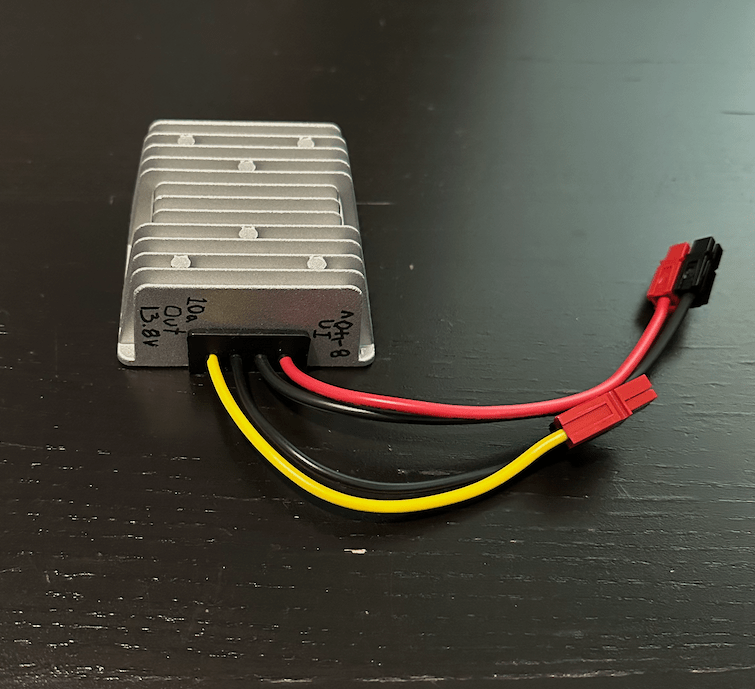
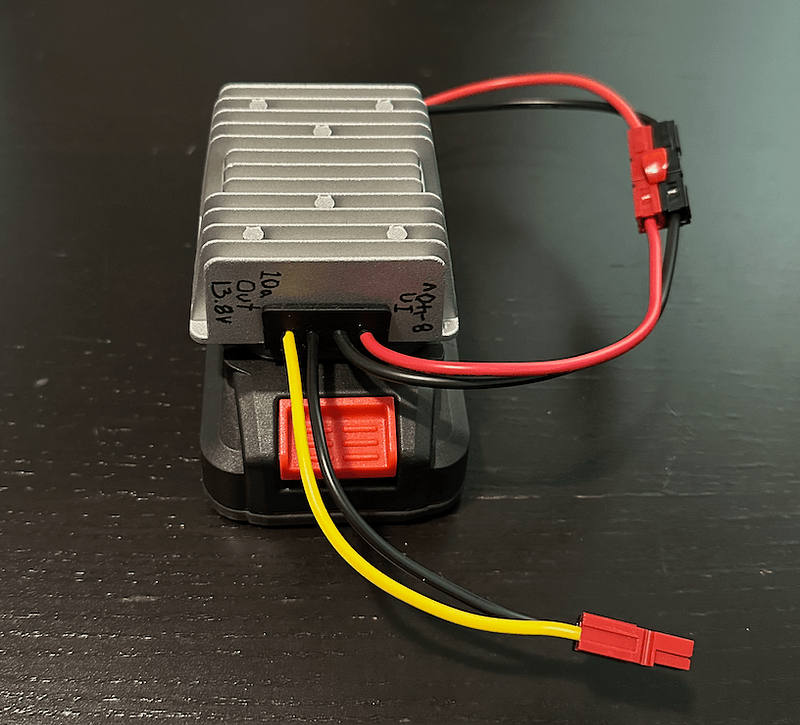
You’ll notice some writing on the side of the buck converter — I used a Sharpie to label the input and output cables, as well as some basic parameters around them. The buck converter pictured is a 13.8v 10a max buck converter that can take from 8v — 40v in. The label will help ensure that I don’t connect things the wrong way later (learned my lesson here…)
That’s…. pretty much it. Optionally, you can add some Velcro to the bottom of the buck converter and to the bottom of the battery output adapter (flat surface against flat surface), however I have not yet done this for my build. At this point, it becomes plug-and-play. Make sure that the battery output adapter is connected to the input side of the buck converter — the buck converter takes power in from the battery at 20v and sends it out to your equipment at 13.8v (or 12v, if you’re using the 12v buck converter).
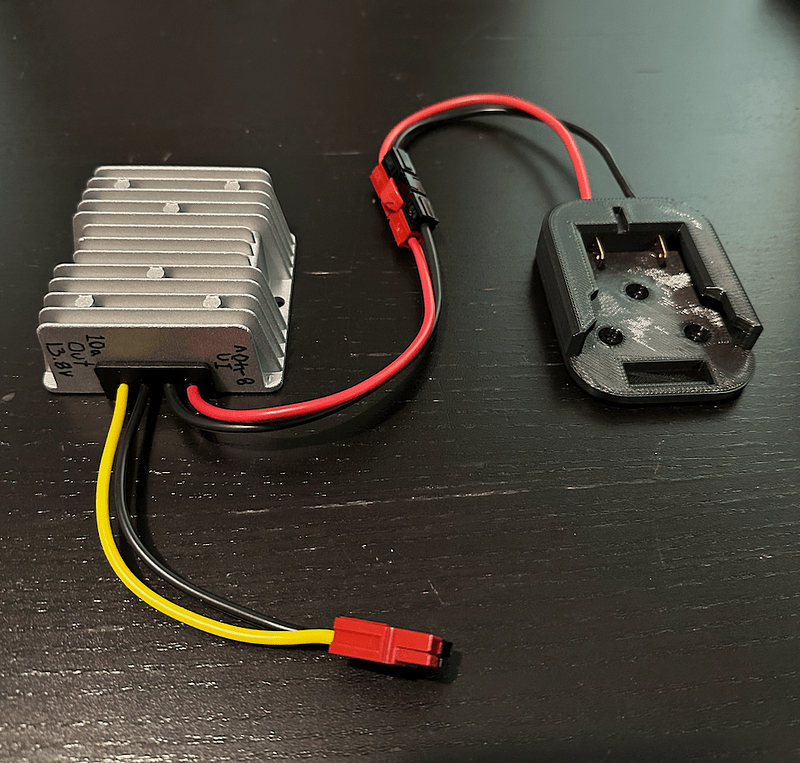
Here’s what the two look like when put back-to-back; while I don’t have Velcro attached, doing so would keep this together in this configuration. This is likely something that I’ll be adding.
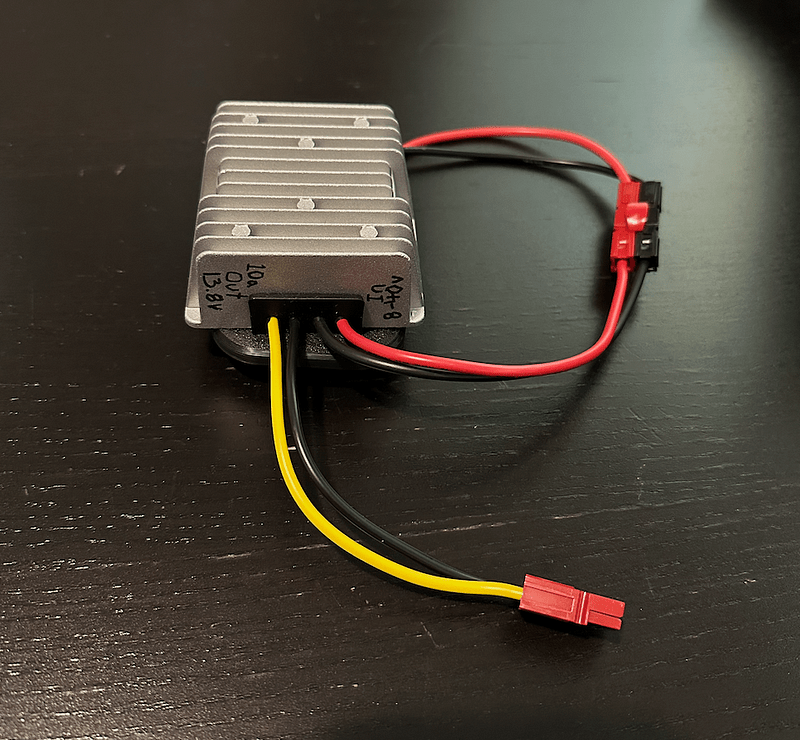
Bring it all together, here’s everything put together, with the battery slid into the battery output adapter and the buck converter back-to-back as in the above image.
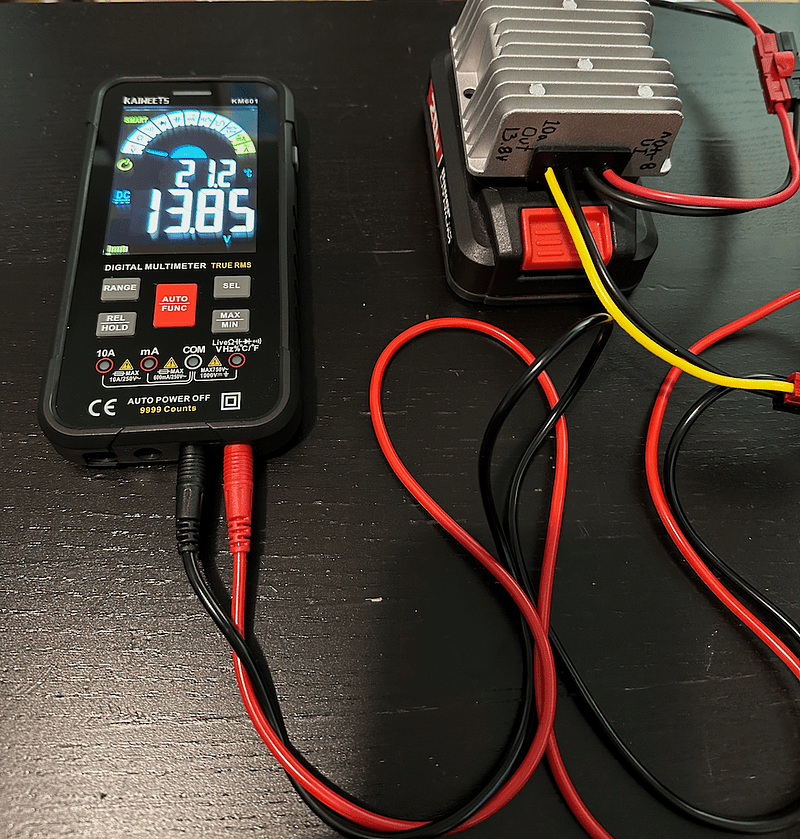
The linked buck converter is actually pretty accurate as far as output voltage goes; it shows as 13.85v on my multimeter. This is great for most ham gear that wants this voltage. For equipment that is sensitive to 13.8v but happy with 12v (looking at you, QMX), the 12v buck converter would be better.
That’s it! Connect your gear to the output Powerpoles and enjoy! You can quickly swap in a new battery if the previous is drained, and use your regular power tool battery chargers to recharge the batteries.
Regarding RFI (“RF Noise”)
It is definitely possible to have (and some people have experienced) RFI from the buck converter here. If you experience that, you many want to try several wraps around a Mix 31 ferrite ring. Because the built-in wires for the converter and battery adapter are relatively short, you’d probably need to build a length of cable (a couple of feet long) that you wrapped around the core several times, with Powerpoles attached to either end. That would then go between the out wires and the device that you were powering.
Powerwerx makes a DC line noise filter that would likely fit the bill here, if you wanted to purchase something premade from a place that makes quality products.
